
- All
- Product Name
- Product Keyword
- Product Model
- Product Summary
- Product Description
- Multi Field Search


Views: 0 Author: Site Editor Publish Time: 2025-12-21 Origin: Site


Power generation systems around the world are under intense pressure to improve efficiency, reduce transmission losses, and support increasingly complex grids driven by renewable energy. At the center of this transformation lies a material that many people do not see, but every power plant depends on: Silicon Steel.
From high-capacity power plant transformers to ultra-efficient distribution transformers, Silicon Steel directly affects how much electricity actually reaches consumers — and how much is lost as heat and vibration. As global electricity demand continues to rise, improvements in transformer core materials have become one of the most cost-effective strategies for achieving higher grid efficiency.
Today, leading manufacturers such as JIACHEN POWER supply advanced electrical steel materials engineered specifically for modern power systems. These include Electrical Steel, Cold-rolled Grain-oriented (CRGO) steel for transformer cores, and Cold-rolled Non Grain-oriented (CRNGO) steel for rotating equipment. With rapid advancements in metallurgy and coating technologies, Silicon Steel is now capable of cutting energy waste in transformers at unprecedented levels.
This article explores how Silicon Steel improves transformer performance, what material grades are used, how the latest technologies influence loss reduction, and how power plants can benefit from upgrading to next-generation transformer core materials.
Power plant transformers work continuously under heavy magnetic loads. The material inside their cores determines:
Core losses (iron loss)
Efficiency during magnetization cycles
Thermal stability
Mechanical strength
Vibration performance
Overall lifespan of the unit
Silicon Steel, with its high electrical resistivity and excellent magnetic properties, is widely used because it minimizes hysteresis and eddy current losses. In high-capacity power plant transformers, reducing these losses even by 1–2% translates into massive annual energy savings.
Lower iron loss → reduces wasted energy
Higher permeability → increases magnetic efficiency
Improved thermal resistance → extends transformer life
Lower magnetostriction → reduces noise
Stable performance under continuous load cycles
These advantages explain why nearly all medium- and high-voltage transformers today rely on Silicon Steel cores.
There are two major types of Electrical Steel relevant to transformer manufacturing, each optimized for specific applications:
CRGO, or Cold-rolled Grain-oriented (CRGO) steel, is specially processed so its grains are aligned in the direction of magnetic flux. This alignment dramatically lowers core loss, making it the industry standard material for transformer cores.
CRGO Advantages in Power Plant Transformers
Extremely low iron loss
Ideal for high-voltage, large-capacity transformers
Excellent magnetization properties in a single direction
Stable performance under constant load
Power plants looking for high-efficiency CRGO materials often source transformer-grade Electrical Steel from JIACHEN POWER.
CRNGO, or Cold-rolled Non Grain-oriented (CRNGO) steel, is magnetically isotropic. Although not as low-loss as CRGO, it is widely used in power-related rotating equipment such as:
Generators
Motors
Pumps
Industrial fans
Its advantages include:
Uniform magnetic performance in all directions
High mechanical strength
Good thermal durability
Both CRGO and CRNGO play essential roles in power generation and transmission systems.
| Property | CRGO Electrical Steel | CRNGO Electrical Steel |
|---|---|---|
| Magnetic Direction | Grain-oriented | Non-oriented |
| Core Loss | Very low | Low |
| Best Application | Transformers | Rotating machines |
| Mechanical Strength | Moderate | High |
| Efficiency Impact | Extremely High | Medium |
| Electrical Grid Priority | Highest | Secondary |
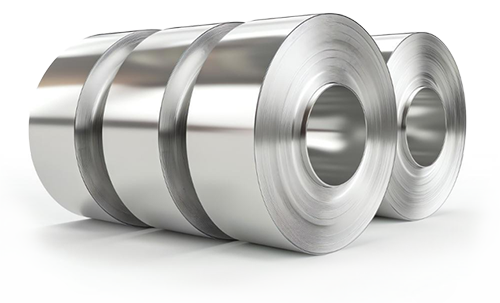
Because transformer efficiency is critical to power plant operations, CRGO remains the preferred choice for all medium and high-voltage transformer cores.
A transformer core undergoes thousands of magnetization cycles per second. Each cycle creates energy losses through:
Hysteresis loss
Eddy current loss
Anomalous loss
Upgrading to advanced Silicon Steel significantly reduces each category.
Silicon increases electrical resistivity, reducing the energy required to magnetize and demagnetize the core.
Modern electrical steel uses thin lamination layers and advanced insulation coatings to block eddy currents.
High permeability means the material requires less energy to carry magnetic flux, improving transformer efficiency.
A single 100-MVA power transformer upgraded with modern high-grade CRGO can save tens of thousands of dollars per year through reduced energy waste.
Transformer technologies are evolving due to global electrification trends. Modern grids require materials that perform reliably under fluctuating loads, higher frequencies, and renewable integration.
Advanced grades achieve unprecedented performance, with iron losses reduced by 10–20% compared to previous generations.
Transformers are increasingly adopting lamination thicknesses of:
0.27 mm
0.23 mm
0.18 mm for high-performance units
These ultra-thin laminations dramatically reduce eddy current losses.
Modern coatings provide:
Better adhesion
Higher heat resistance
Reduced magnetostriction (noise control)
Due to renewable energy inverters, transformers must handle higher frequencies more often. Advanced Silicon Steel formulations meet this need.
Below is a simplified representation of how transformer efficiency improves with different Electrical Steel grades:
| Material Type | Core Loss (W/kg) | Typical Efficiency | Use Case |
|---|---|---|---|
| Standard Steel | Very high | 94% | Obsolete systems |
| Low-grade Silicon Steel | High | 96% | Small transformers |
| Conventional CRGO | Moderate | 98% | Distribution transformers |
| High-grade CRGO | Low | 98.5% | Power plant transformers |
| Ultra-low-loss CRGO | Very low | 99%+ | High-capacity grid transformers |
Every fraction of a percent in transformer efficiency leads to massive long-term savings at the power plant level.
JIACHEN POWER provides transformer-grade Silicon Steel materials engineered for grid-level performance. Their product portfolio includes:
Many customers explore material specifications or request samples directly through the Electrical Steel page.
Upgrading to next-generation CRGO can reduce core losses by up to 30%.
Reduced iron loss directly decreases electricity waste.
Lower thermal stress leads to longer transformer lifespan and fewer outages.
Better core materials allow transformers to operate closer to their full rated load safely.
Most countries now require transformers to meet stricter loss limits, and advanced Silicon Steel helps achieve compliance.
Because Silicon Steel lowers iron loss, improves magnetic permeability, and significantly increases transformer efficiency.
Yes. Cold-rolled Grain-oriented (CRGO) steel is optimized for transformer cores due to its directional magnetic properties.
Cold-rolled Non Grain-oriented (CRNGO) steel is widely used in generators and motors inside power plants.
High-grade CRGO can reduce core losses by 10–30%, depending on operating conditions.
Yes. JIACHEN POWER supplies both CRGO and CRNGO materials suitable for power plant applications.


