
- All
- Product Name
- Product Keyword
- Product Model
- Product Summary
- Product Description
- Multi Field Search


Views: 0 Author: Site Editor Publish Time: 2025-12-16 Origin: Site


Humanoid robots are transitioning from futuristic concepts to operational machines capable of navigating complex environments, performing physical labor, and interacting safely with humans. As this new generation of intelligent robots enters factories, warehouses, and service fields, their performance increasingly depends on one critical component: the joint-level torque motor. And at the heart of these motors lies Silicon Steel, the essential magnetic material enabling high torque density, energy efficiency, and precise movement control.
Today’s humanoid robots require motors that are compact yet extremely powerful. They must operate at high frequencies, withstand continuous dynamic loads, and maintain efficiency to extend battery runtime. These engineering demands have accelerated the adoption of advanced Silicon Steel, including high-induction, low-loss grades of Electrical Steel, Cold-rolled Grain-oriented (CRGO), and Cold-rolled Non Grain-oriented (CRNGO) materials.
This article explains how these materials revolutionize humanoid robot performance, supported by data tables, real-world applications, material comparisons, and naturally embedded internal links to JIACHEN POWER’s technical resources.
Torque motors used in humanoid robots—often frameless and embedded directly into the joints—must provide:
Extremely high torque in a compact structure
Low iron loss during fast acceleration and deceleration
Stable magnetic characteristics at high frequencies (200–800Hz)
Excellent temperature resistance
Low acoustic noise
High strength laminations that resist deformation
These performance factors directly relate to the magnetic material used in the stator and rotor cores. High-magnetic-induction Silicon Steel offers:
Higher magnetic flux density
Lower core loss
Stronger torque per unit size
Improved efficiency and reduced heat generation
Smoother motor output for dynamic balancing
This makes Silicon Steel indispensable for bipedal and humanoid robots.
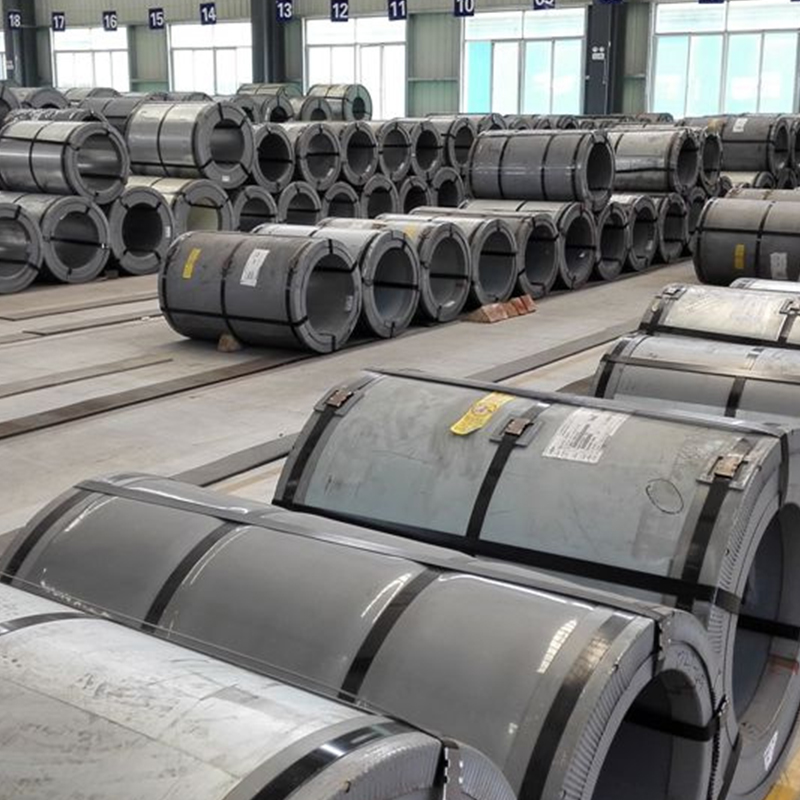
Electrical Steel, a category of precision magnetic alloys, defines the performance baseline for all modern torque motors. High-induction Silicon Steel improves the relationship between motor size and torque output, which is vital for human-like joints where space is extremely limited.
Many engineers evaluating material grades and thickness options refer to JIACHEN POWER’s Electrical Steel resource page, where detailed curves, induction tables, and sample specifications help designers compare options efficiently.
Higher flux = more torque without enlarging the motor
Lower core loss = cooler, more efficient operation
Better frequency tolerance = smoother, more precise motion
Stronger laminations = stable performance during assembly
For humanoid robots, efficiency isn’t a bonus—it is essential for longer operational time and safe interaction with humans.
Both Cold-rolled Grain-oriented (CRGO) and Cold-rolled Non Grain-oriented (CRNGO) materials are widely used across electrical engineering, but their behavior differs greatly in robotics.
| Feature | CRGO | CRNGO |
|---|---|---|
| Grain Orientation | Highly oriented in one direction | Non oriented, uniform in all directions |
| Best Frequency Range | 50–60Hz | 200–800Hz |
| Magnetic Profile | Excellent in one direction | Balanced in multiple directions |
| Typical Use | Transformers | Motors and drives |
| Suitability for Robots | Limited (unless modified) | Excellent for rotating torque motors |
Humanoid robot motors require rotational symmetry, uniform magnetic performance, and low loss under high frequencies—making CRNGO the more suitable choice for joint motors. However, modified CRGO with improved frequency performance is increasingly explored in high-torque robot actuators.
High-magnetic-induction Silicon Steel is a technological breakthrough for torque motor design. Increasing induction from 1.65T to 1.75T+ delivers exponential performance improvements without increasing motor size.
10–18% torque increase at the same motor dimensions
Reduced copper usage, decreasing heat production
Lower energy consumption, extending robot operation time
Smoother control, essential for balance and dynamic gait
Lower vibration and noise, improving safety for human-robot interaction
These improvements directly enhance humanoid robot mobility and energy efficiency.
| Material | Induction (T) | Iron Loss at 400Hz (W/kg) | Result |
|---|---|---|---|
| Standard CRNGO | 1.65 | 18–20 | Higher heat, limited torque |
| High-Induction CRNGO | 1.73 | 12–14 | Stronger torque, reduced loss |
| Premium Robot-Grade Silicon Steel | 1.75–1.78 | 8–10 | Maximum torque, ideal for humanoid joints |
Robot-grade Silicon Steel is becoming a foundational material for next-generation actuators.
Torque motor laminations in humanoid robots face mechanical stress during assembly—especially press-fitting, bonding, and thermal cycling. High-strength Silicon Steel mitigates the common problem of magnetic degradation caused by mechanical deformation.
Reverse interference fit to minimize distortion
Ultra-thin 0.20–0.27mm laminations for high-frequency motors
Advanced bonding coatings to suppress vibration and noise
Precision laser-cut laminations for optimal flux path design
These innovations align perfectly with the requirements of humanoid robots, where precision is paramount.
Below is a breakdown of how Silicon Steel affects actual robotic performance:
| Robot Function | Silicon Steel Influence | Resulting Benefit |
|---|---|---|
| Walking & balancing | Higher induction | Stronger, more stable torque |
| Manipulation & lifting | Lower loss | Efficient, cooler motors |
| Fine control | Uniform magnetic response | Smooth and precise articulation |
| Endurance | Reduced core loss | Longer battery runtime |
| Safety | High structural strength | Lower deformation risk |
Nearly all key performance metrics in humanoid robotics relate directly to the magnetic material used.
As the humanoid robot industry moves toward mass production, manufacturers require materials that are:
Highly consistent batch to batch
Customizable for special motor geometries
Suitable for ultra-thin lamination processing
Backed by technical magnetic design support
JIACHEN POWER supplies robot-grade Silicon Steel laminations engineered specifically for high-torque frameless motors. Engineers seeking material curves, sample requests, or lamination customization typically visit the Electrical Steel product page for direct access to specifications.
For designers focused on CRGO and CRNGO variants for robotics, JIACHEN POWER also provides detailed consultation and material resources on Cold-rolled Non Grain-oriented (CRNGO) that help engineers compare magnetic behaviors at various frequencies.
Trends defining the next wave of humanoid robot magnetic materials include:
Lamination thickness approaching 0.18mm
Magnetic induction rising toward 1.78–1.80T
High-frequency loss reductions of 20–30%
New hybrid orientation structures combining CRGO and CRNGO advantages
Intelligent bonding coatings that reduce amplitude and noise
These advancements will allow humanoid robots to achieve smoother, faster, and safer motion than ever before.
High-induction Silicon Steel combined with advanced CRNGO electrical steel is ideal due to its balanced magnetic performance and low high-frequency loss.
Modified Cold-rolled Grain-oriented (CRGO) materials can be used in certain robot actuators, but CRNGO remains the primary choice for rotating torque motors.
It increases torque output without increasing motor size—critical for compact humanoid joints.
Yes. JIACHEN POWER provides precision rotor and stator laminations, bonding options, and engineering guidance tailored to humanoid robot torque motors.
Full specifications and sample request options are available on the Electrical Steel materials page.


