
- All
- Product Name
- Product Keyword
- Product Model
- Product Summary
- Product Description
- Multi Field Search


Views: 299 Author: Site Editor Publish Time: 2026-03-17 Origin: Site


In the world of electrical engineering, the pursuit of energy efficiency often leads back to the heart of the machine: the magnetic core. If you are looking for a solution that combines High efficiency with a compact design, understanding the wound core transformer is essential. Unlike traditional laminated cores made of stacked sheets, a wound core is manufactured by winding a continuous strip of silicon steel. This unique construction isn't just a design choice; it is a technical evolution that solves significant energy loss problems in modern power grids.
Whether you are a procurement officer for a utility company or an engineer designing a Custom industrial power system, the way a transformer core is built dictates its performance for decades. In this comprehensive guide, we will break down exactly what a wound core is, how its continuous loop technology works, and why it has become the gold standard for Low loss energy distribution.
At its simplest, a wound core is a magnetic circuit made from a long, continuous ribbon of grain-oriented silicon steel. We create it by tightly winding this ribbon around a mandrel, much like a roll of tape. This differs fundamentally from "stacked cores," where hundreds of individual E-shaped and I-shaped pieces are layered on top of each other.
In a stacked core, every joint between two pieces of steel creates a tiny air gap. These gaps increase "reluctance," which is essentially magnetic resistance. Because the wound core is continuous, it eliminates almost all of these air gaps. This allows the magnetic flux to flow smoothly without interruption. This structural integrity is the primary reason why it is a Low loss component. It ensures that the magnetic field stays focused where it belongs, reducing the energy wasted as heat.
Steel has a "grain," similar to wood. Magnetic flux travels much more easily along the grain than across it. In a wound core, the steel strip is wound so the grain always follows the path of the magnetic flux. They stay in perfect alignment throughout the entire loop. This synergy between material science and mechanical design makes it possible to achieve High efficiency levels that older stacked designs simply cannot match.
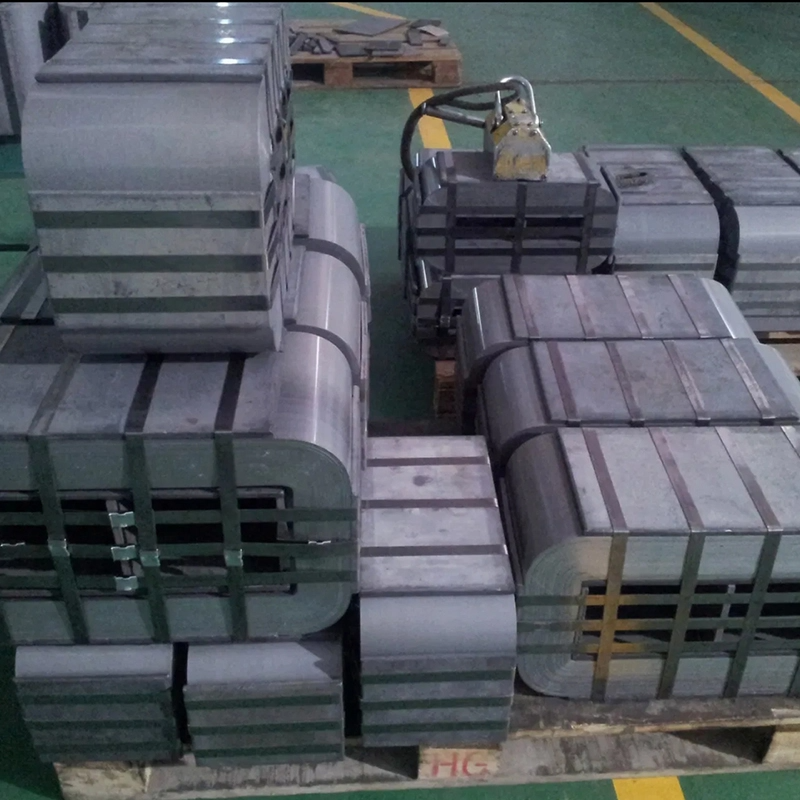
A transformer works on the principle of electromagnetic induction. When electricity flows through the primary coil, it creates a magnetic field. This field travels through the core and "induces" a voltage in the secondary coil. The efficiency of this process depends entirely on how well the core can transport that magnetic field.
In a wound core, the magnetic flux travels in a circular or Rectangular loop that never leaves the steel. Because there are no jagged joints or cross-grain sections, the "magnetizing current"—the amount of electricity needed just to wake up the core—is significantly lower. It acts like a frictionless highway for magnetic energy. This makes the transformer much quieter, as it reduces the "magnetostriction" (the humming sound) that occurs when magnetic fields struggle against the physical structure of the core.
For High voltage applications, the stability of the core is paramount. The continuous nature of the wound core provides a very stable magnetic path that can handle rapid fluctuations in load. Since the core is often annealed (heated and slowly cooled) after winding, the internal stresses in the steel are removed. This process locks in the magnetic properties, ensuring that the transformer maintains its High efficiency even under heavy industrial stress.
Not all wound core designs look the same. Depending on the application, engineers choose different shapes to optimize space and performance.
The Toroidal shape is essentially a perfect donut. This is the most efficient magnetic shape possible. Because it has no corners, the flux remains perfectly uniform. Toroidal cores are widely used in sensitive audio equipment and Custom industrial electronics where electromagnetic interference (EMI) must be kept to an absolute minimum. They are compact, lightweight, and offer the lowest noise profile of any core type.
For larger distribution transformers, a Rectangular shape is often more practical for winding the copper or aluminum coils.
Rectangular Wound Cores: These allow for easy assembly of the windings while keeping the benefits of a continuous magnetic path.
Unicore/Distributed Gap Cores: These are advanced versions where the continuous strip is cut at specific intervals to create a "distributed gap." This makes it easier to open the core, slip on a pre-made coil, and close it back up without losing the Low loss benefits. It combines the ease of stacked core assembly with the performance of a wound core.
For anyone managing a power budget, "Core Loss" (also known as "No-Load Loss") is a silent thief. It is the energy a transformer consumes 24 hours a day, 365 days a year, even when no one is using electricity.
While a wound core might require more specialized machinery to produce, its Low loss characteristics pay for themselves quickly. Because it eliminates the high-reluctance joints found in stacked cores, the no-load losses can be 20% to 30% lower. Over a 30-year lifespan, this represents a massive reduction in wasted energy and carbon emissions.
| Feature | Stacked Core | Wound Core |
| Magnetic Path | Interrupted by joints | Continuous |
| Core Loss | Higher | Low loss |
| Manufacturing | Labor-intensive (stacking) | Machine-intensive (winding) |
| Noise Level | Louder (vibration at joints) | Quieter |
| Efficiency | Standard | High efficiency |
Because the magnetic flux flows so easily, we can often use less steel to achieve the same power rating. This results in a smaller, lighter transformer. For Custom industrial applications where space is at a premium—such as inside a wind turbine nacelle or a crowded basement—the compact footprint of a wound core design is a decisive advantage.
The performance of a wound core is determined by how it is made. It is a high-tech process that requires specialized equipment to ensure the steel ribbon is handled with care.
The steel strip must be wound under precise tension. If it is too loose, the core will vibrate and buzz. If it is too tight, the crystal structure of the steel will be damaged, increasing losses. Modern Automatic machines ensure that every layer is perfectly aligned. For Rectangular cores, the machine must vary the speed and tension as it moves around the corners to maintain a uniform density.
When you bend steel into a Toroidal or Rectangular shape, you introduce mechanical stress. This stress ruins the magnetic alignment of the grains. To fix this, we place the finished wound core into an annealing furnace. We heat it to roughly 800°C in a nitrogen-rich atmosphere and then cool it slowly. This "relaxes" the steel and restores its Low loss properties. Without this step, a wound core would actually perform worse than a stacked core. It is a critical part of the "Expert Insight" into high-end transformer production.
While you will find them in the green boxes (distribution transformers) on suburban street corners, wound core technology is also vital for specialized industrial uses.
Solar and wind farms require transformers that can handle fluctuating inputs and maintain High efficiency to maximize the "green" energy yield. Wound core designs are perfect here because they can be easily scaled for High voltage step-up applications while keeping the weight low for transport to remote sites.
In medical imaging (like MRI machines) or precision laboratory power supplies, the magnetic "cleanliness" of a Toroidal wound core is unmatched. It prevents stray magnetic fields from interfering with sensitive sensors. When a project requires a Custom industrial solution with strict EMI requirements, the wound core is usually the first choice on the drawing board.
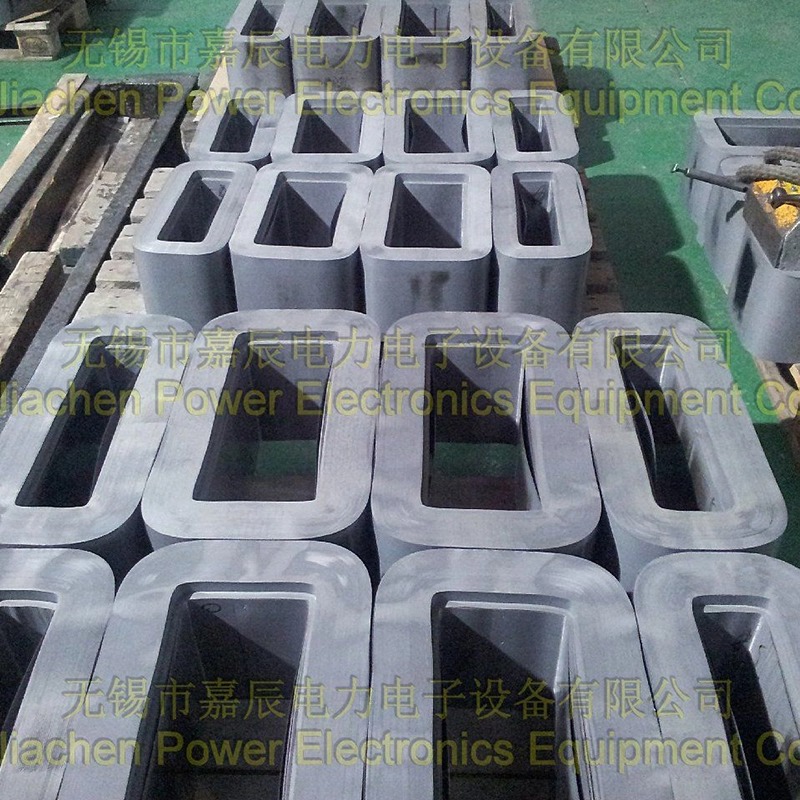
The industry is moving toward even thinner materials to push the boundaries of energy savings.
Traditional silicon steel is crystalline. Amorphous metal, however, has a disordered, glass-like atomic structure. This makes it incredibly easy to magnetize. While amorphous metal is very thin and brittle (making it impossible to use in stacked cores), it is perfect for the wound core process. An amorphous wound core can reduce no-load losses by another 70% compared to standard silicon steel. It is the ultimate expression of Low loss technology in the 2020s.
As we move forward, we use digital models to simulate exactly how a Custom industrial core will behave before we even wind it. By adjusting the number of layers and the tension in the software, we can produce High efficiency cores that are perfectly tailored for specific frequencies or extreme temperatures. It makes the production process faster and reduces material waste.
The wound core transformer is a testament to how subtle changes in geometry can lead to massive gains in performance. By moving from a stacked design to a continuous, loop-based wound core, we eliminate the "friction" in the magnetic circuit. The result is a High efficiency, Low loss machine that operates quietly and lasts for decades. Whether you are dealing with High voltage distribution or Toroidal precision electronics, the wound core remains the heart of a reliable power system.
Q1: Is a wound core transformer more expensive than a stacked one?
Initially, yes. The specialized winding and annealing equipment increases the upfront manufacturing cost. However, the Low loss performance significantly reduces the total cost of ownership over the transformer’s life through energy savings.
Q2: Can any transformer use a wound core?
Not always. For extremely large power transformers (MVA scale), the mechanical challenges of winding massive steel strips make stacked cores more practical. Wound core technology is most dominant in small-to-medium distribution and Custom industrial transformers.
Q3: Does a wound core hum less?
Yes. Because it has fewer joints and the grains are perfectly aligned with the flux path, there is less physical vibration. This makes it much quieter, which is a major benefit for indoor or residential installations.


