
- All
- Product Name
- Product Keyword
- Product Model
- Product Summary
- Product Description
- Multi Field Search


Views: 249 Author: Site Editor Publish Time: 2026-03-13 Origin: Site


In the world of electrical engineering, the heart of any transformer is its magnetic core. When you are embarking on a new power distribution or electronics design, selecting a High efficiency wound core can be the deciding factor between a system that runs cool and one that wastes energy as heat. Unlike traditional stacked laminations, the "wound" method offers a continuous magnetic path that significantly reduces flux leakage and audible noise.
This guide focuses on "Expert Insight" for engineers and procurement officers. We will help you navigate the technical nuances of choosing the right wound core for your specific transformer projects. We will cover everything from geometric shapes like the Toroidal design to the material science behind achieving Low loss performance in High voltage environments. By the end of this article, you will know exactly how to specify a Custom industrial core that meets your performance targets and budget.
The primary reason to choose a wound core over traditional E-I laminations is the grain orientation of the steel. In a stacked core, the magnetic flux must travel across the grain and jump between gaps in the corners. This creates resistance and heat. A High efficiency wound core is made from a continuous strip of Grain-Oriented Electrical Steel (GOES).
Because the strip is wound in the same direction as the steel's grain, the magnetic flux encounters very little resistance. This results in a Low loss profile, which is critical for meeting modern energy efficiency standards. Experts estimate that a wound core can reduce "no-load" losses by up to 30% compared to traditional stacking methods. This efficiency makes it the primary choice for modern green-energy grids and sensitive medical equipment.
Traditional stacked cores often hum or buzz due to "magnetostriction"—the physical vibration of the individual plates. In a tightly wound core, these vibrations are significantly dampened. The continuous nature of the winding reduces air gaps to nearly zero. If your project is for an indoor environment or a quiet residential neighborhood, a Toroidal or Rectangular wound core is the only logical choice to keep noise levels within acceptable limits.
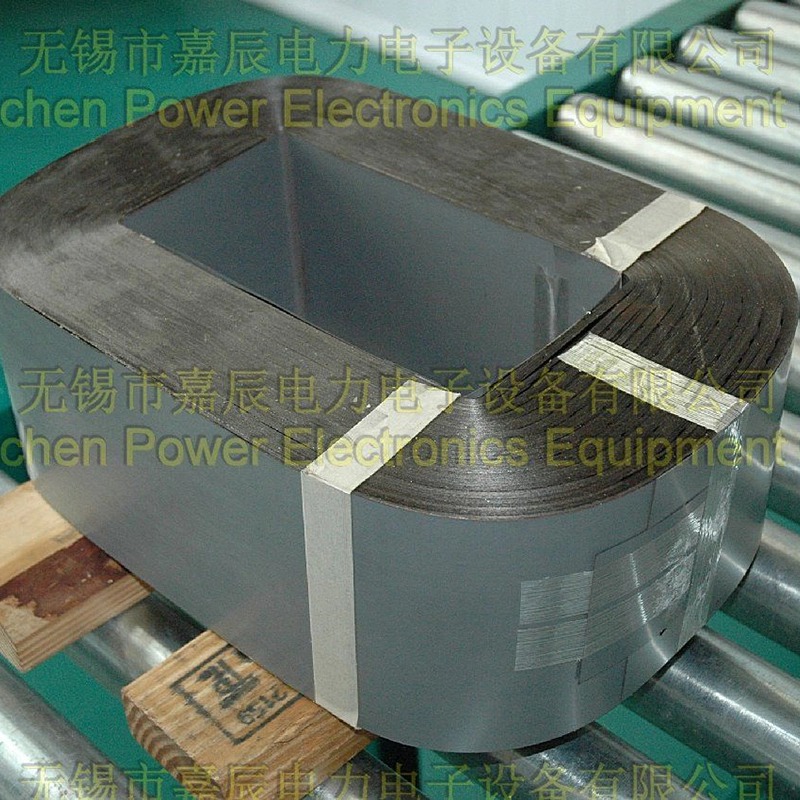
The shape of your wound core dictates the physical footprint of your transformer and how the primary and secondary coils are wound. Depending on your project’s spatial constraints, you will likely choose between a Toroidal or a Rectangular design.
The Toroidal (donut-shaped) wound core is widely considered the most efficient shape. It has no corners, meaning the magnetic flux stays perfectly contained within the core. It is the gold standard for High efficiency applications where space is limited. Because the windings cover the entire surface of the core, it also offers excellent heat dissipation.
While toroids are efficient, they can be difficult to wind with heavy-gauge wire. A Rectangular wound core (often seen as a "Unicore" or "C-core") provides a flat surface that is easier for automatic winding machines. These are commonly used in Custom industrial power transformers and High voltage distribution units. They provide a balance between the high performance of the wound method and the manufacturing ease of a flat-faced structure.
The steel grade you select for your wound core is just as important as its shape. Not all Grain-Oriented Electrical Steel is created equal. To achieve truly Low loss results, you must look at the thickness and the silicon content of the material.
Most High efficiency cores use high-permeability silicon steel. Thinner strips (measured in millimeters, such as 0.23mm or 0.27mm) generally result in lower eddy current losses. If your transformer project involves high frequencies, you should specify an ultra-thin wound core to prevent the core from overheating.
For projects where energy conservation is the absolute priority, amorphous metal is an option. It has a non-crystalline structure that offers the lowest possible loss. However, it is more brittle and difficult to handle than standard silicon steel. Most Custom industrial projects find a happy medium using high-grade GOES, which offers a Durable and Low loss solution without the extreme cost of amorphous materials.
In High voltage applications, the wound core must be able to withstand significant electrical stress. Insulation is not just for the copper wires; the core itself requires a professional surface treatment to prevent short-circuiting between layers.
Every layer of a wound core is coated with a thin inorganic insulation. This prevents eddy currents from circulating through the entire body of the core. If this insulation fails, the core will heat up rapidly, leading to a catastrophic transformer failure. Experts always verify the insulation resistance of a Custom industrial core before it is sent for winding.
When you wind a core, the steel is physically stressed. This stress damages the magnetic properties of the grain. To fix this, a High-quality wound core must be annealed in a vacuum furnace at temperatures exceeding 800°C. This process "relaxes" the steel and restores its Low loss characteristics. Always ask your supplier for their annealing charts to ensure the core reaches its theoretical efficiency peak.
One of the greatest advantages of the wound core is its flexibility. Unlike standardized E-I laminations that come in fixed sizes, a wound core can be manufactured to your exact dimensions.
The "window" is the hole in the middle of the core where the wires go. If the window is too small, you cannot fit enough copper for your High voltage requirements. If it is too large, you are wasting space and increasing the weight. A Custom industrial wound core allows you to specify the inner diameter (ID), outer diameter (OD), and height (H) to the millimeter. This optimization ensures your transformer has the best power-to-weight ratio.
In heavy-duty projects, the height of the wound core affects how well it sheds heat. A taller, thinner core has more surface area but might be harder to fit into a standard enclosure. By working with a specialist, you can adjust the "stack height" of your wound core to find the sweet spot between electrical efficiency and thermal stability. This level of customization is what separates a professional design from a generic one.
You cannot see magnetism, so you must rely on rigorous testing to ensure your wound core is performing as expected. A "good" core on paper can fail in the field if the manufacturing quality is low.
The primary test for a wound core is the B-H curve analysis. This measures how much magnetic flux (B) the core can hold relative to the magnetizing force (H). A High efficiency core should have a high saturation point, allowing the transformer to handle power surges without failing.
Exciting current is the electricity the transformer uses just to "stay awake." A Low loss wound core will have a very small exciting current. If this value is high, it usually indicates that the core was not annealed properly or that the layers are shorting out. Procurement officers should always demand a test report for every batch of Custom industrial cores to guarantee consistency.
| Test Type | Metric | Why it Matters |
| No-Load Loss | Watts/Kg | Directly affects energy bills |
| Exciting Power | VA/Kg | Determines "standby" efficiency |
| Dimensional Check | mm | Ensures the core fits the winding jig |
| Noise Level | dB | Critical for residential/indoor use |
Choosing between shapes is often a trade-off between electrical perfection and manufacturing cost.
Toroidal Wound Core:
Pros: Best High efficiency, lowest noise, zero magnetic leakage.
Cons: Harder to wind, generally more expensive for large power sizes.
Rectangular/C-Core:
Pros: Easy to assemble, great for High voltage bushings, better for mass production.
Cons: Slightly higher losses at the corners compared to a circle.
For small electronics and high-end audio, the Toroidal wound core is king. For the electrical grid and heavy Custom industrial machinery, the Rectangular or Step-lap wound designs are the industry standard.
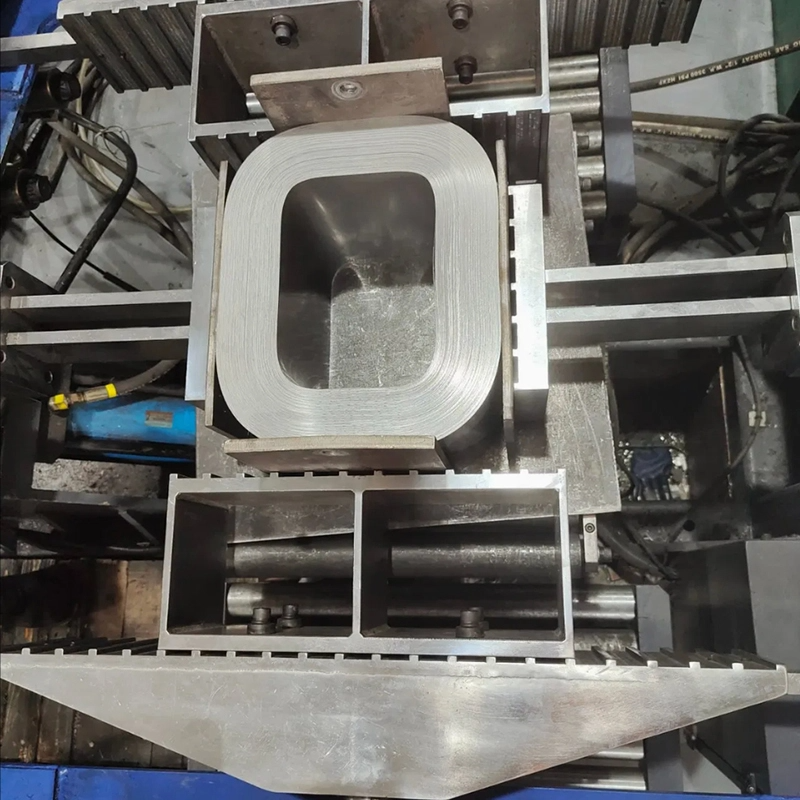
In 2026, energy efficiency is no longer optional. Governments around the world are mandating lower losses for distribution transformers. Choosing a High efficiency wound core is a proactive way to future-proof your projects.
While a Low loss wound core might have a higher upfront cost than a stacked core, the return on investment (ROI) is significant. Over a 20-year lifespan, the energy saved by a wound core can pay for the transformer itself several times over. This is a powerful selling point for B2B clients who are focused on operational costs.
Using less steel to achieve the same power output is inherently Eco-friendly. Furthermore, the reduced heat output of a wound core transformer means you need less cooling oil or fewer fans, reducing the overall environmental footprint of your installation. It is a win-win for both the balance sheet and the planet.
Choosing the right wound core is a balancing act of geometry, material science, and manufacturing precision. Whether you prioritize the absolute Low loss of a Toroidal design or the robust reliability of a Rectangular Custom industrial core for High voltage work, the "wound" method remains the superior choice for modern transformers. By focusing on grain orientation, proper annealing, and optimized dimensions, you can ensure your transformer project is a success.
Q1: Can I repair a damaged wound core?
A: Generally, no. Because the wound core is a continuous strip, if the layers are fused or the steel is bent, you cannot easily "replace" a part of it like you can with stacked laminations. It is better to replace the entire core.
Q2: Is a wound core better for high-frequency applications?
A: Yes, provided you use very thin laminations. The continuous path of a High efficiency wound core minimizes the "stray" magnetic fields that cause interference in high-frequency circuits.
Q3: Why is annealing so important for a wound core?
A: Bending the steel creates internal stress that blocks the magnetic path. Annealing acts like a "reset button," allowing the atoms to realign so the core can achieve its Low loss potential.


