
- All
- Product Name
- Product Keyword
- Product Model
- Product Summary
- Product Description
- Multi Field Search


Views: 319 Author: Site Editor Publish Time: 2026-03-21 Origin: Site


In the world of industrial power distribution, the "heart" of the system is the transformer. For decades, engineers relied on traditional stacked-core designs. However, as global energy prices rise and sustainability mandates tighten in 2026, the industry is shifting. The wound core transformer has emerged as the superior choice for high-performance applications. Unlike traditional cores made of flat, stacked sheets, this technology uses a continuous strip of silicon steel.
This guide explores the specific advantages of integrating wound core technology into your industrial infrastructure. We will look at why it offers High efficiency, how it reduces operational costs, and why its physical design—whether Toroidal or Rectangular—is changing the way we build power grids. If you are a procurement officer or an electrical engineer, this "Expert Insight" will show you why the wound core is the future of industrial energy.
The primary reason industries switch to a wound core is the dramatic reduction in energy waste. In a standard stacked core, the magnetic flux must jump across joints between the steel sheets. This creates "no-load losses," which means the transformer wastes electricity even when it isn't doing any work.
A wound core is made from a continuous ribbon of grain-oriented silicon steel. Because there are no gaps or "lapped joints" in the magnetic path, the flux flows smoothly. This results in a Low loss profile that stacked cores simply cannot match. For a 24/7 manufacturing facility, these small savings in "iron loss" add up to thousands of dollars in reduced utility bills every year.
Because the wound core is High efficiency, it generates significantly less heat. Heat is the number one killer of transformer insulation. By running cooler, these units last longer and require less cooling infrastructure. Whether you are using a Rectangular or Toroidal shape, the thermal stability of a wound core ensures your industrial operations stay online without unexpected thermal shutdowns.
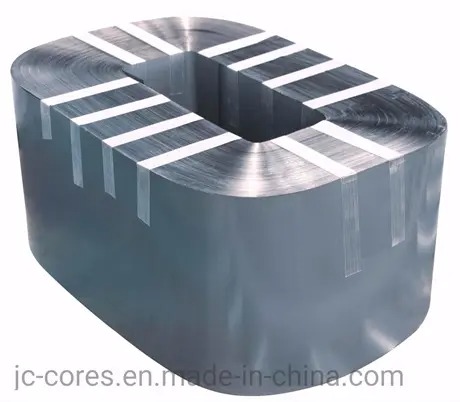
Magnetism is picky. It prefers to travel in the same direction as the grain of the steel. In traditional cores, the corners create "cross-grain" areas where the magnetic field struggles. This creates noise and heat.
The wound core eliminates the air gaps found in the corners of traditional transformers. By winding the steel tightly, we create a nearly perfect magnetic circuit. This leads to a much lower "exciting current." Essentially, the transformer needs less energy just to "wake up" and start moving power. In a High voltage environment, this efficiency gain is critical for maintaining grid stability.
Industrial plants are already loud, but "transformer hum" adds a specific type of low-frequency stress to the environment. Because the wound core is a continuous piece of steel without loose laminations that vibrate against each other, it is naturally much quieter. This is a huge advantage for factories located near residential areas or for indoor Custom industrial installations where noise pollution must be minimized.
Every industrial site has different space constraints. One of the best features of wound core technology is its ability to be shaped to fit the application. We don't have to stick to one-size-fits-all boxes anymore.
A Toroidal wound core is essentially a donut. This is the most efficient shape known to electrical engineering. It has the shortest magnetic path and the lowest electromagnetic interference (EMI). This makes it perfect for sensitive Custom industrial electronics or medical equipment where stray magnetic fields could cause problems.
For larger power distribution needs, the Rectangular wound core is the standard. It allows for easy winding of the copper or aluminum coils while maintaining the continuous-path benefits of the technology. It provides a compact footprint, allowing you to fit a more powerful transformer into a smaller substation cabinet. This "power density" is a major selling point for urban industrial parks where real estate is expensive.
| Core Type | Magnetic Path | Best For | EMI Level |
| Stacked Core | Discontinuous (Gaps) | Budget/Low-end | High |
| Toroidal Wound | Continuous (Circular) | Precision/Medical | Extremely Low |
| Rectangular Wound | Continuous (Loop) | Distribution/Grid | Low |
Industrial power grids are prone to "faults" or short circuits. When this happens, a massive burst of mechanical force tries to rip the transformer apart. The physical structure of the core determines if the unit survives or explodes.
Because the wound core is tightly bound and often annealed as a single unit, it is much more Durable than a stack of loose sheets. It acts like a solid block of steel. Under the stress of a short circuit, it resists the "hoop stress" that usually deforms traditional coils.
For a High voltage industrial setup, a transformer failure is a disaster. Using a wound core provides an extra layer of mechanical security. It ensures that your power stays on even when the external grid faces a surge or a fault. This Low loss and high-strength combination makes it the most reliable choice for heavy-duty manufacturing where downtime costs $10,000+ per hour.
Not every industrial task is the same. Sometimes you need a transformer that handles weird frequencies or specific voltage curves. This is where Custom industrial wound core designs shine.
Because we can control the tension and the number of wraps in a wound core, we can "tune" the magnetic properties. We can use thinner ribbons of steel to reduce "eddy current" losses in high-frequency applications. This level of customization is difficult and expensive with traditional stacked cores.
When designing a High voltage wound core, the grade of the silicon steel is everything. We often use "laser-scribed" steel. This material has been treated to keep the magnetic domains small, which leads to High efficiency even at the highest power levels. Procurement officers should always ask about the "grade" of the steel used in the winding process.
Once a core is wound, it must be "annealed" in a vacuum furnace. This process removes the physical stress caused by the winding machine. Without proper annealing, the wound core will not achieve its Low loss potential. A High-quality manufacturer will have a strict, multi-hour annealing cycle to ensure the magnetic properties are perfectly restored.
In 2026, "Green" isn't just a buzzword; it's a legal requirement. Carbon taxes and energy efficiency standards are forcing industries to look at the "Total Life Cycle" of their equipment.
Because a wound core is High efficiency, it requires less coal or gas to be burned to cover the "wasted" energy. Over a 30-year lifespan, a single wound core distribution transformer can save tons of CO2 emissions compared to a stacked version. This helps your company meet ESG (Environmental, Social, and Governance) goals.
The manufacturing process for a wound core produces significantly less scrap metal than stamping out flat sheets for stacked cores. It is a much more Eco-friendly production method. Furthermore, because the core is primarily silicon steel and copper, it is almost 100% recyclable at the end of its life. Choosing a wound core is a statement that your industry is committed to a circular economy.
To help procurement officers make the right choice, we have analyzed the two dominant technologies across four key industrial metrics.
| Metric | Stacked Core | Wound Core | Industrial Winner |
| No-Load Loss | Higher (Due to joints) | Low loss (Continuous) | Wound Core |
| Inrush Current | Standard | Lower | Wound Core |
| Manufacturing Speed | Slower (Manual stacking) | Faster (Automatic winding) | Wound Core |
| Customization | Difficult | Highly Flexible | Wound Core |
The data is clear. While stacked cores might have a slightly lower initial purchase price in some small-scale markets, the wound core wins on "Total Cost of Ownership." The energy savings alone usually pay for the price difference within the first 2 to 3 years of operation.

As industries move toward solar and wind power, the grid becomes more "jittery." These energy sources are variable. Transformers must be able to handle fluctuating loads without overheating or losing efficiency.
Renewable energy uses inverters, which can introduce "harmonics" into the system. A wound core handles these harmonics much better than stacked designs. Its High efficiency remains stable even when the power quality isn't perfect. This makes it the backbone of the "Green Industrial Revolution."
Many industrial renewable sites (like wind farms) are in remote areas. You cannot easily send a repair crew out every month. The Durable nature of a wound core and its resistance to environmental stress mean it is the "set it and forget it" solution for modern energy infrastructure. Whether it's a Toroidal unit in a small control box or a massive distribution unit, the wound core delivers peace of mind.
The advantages of the wound core in an industrial setting are undeniable. From its High efficiency and Low loss magnetic path to its superior mechanical strength and High voltage stability, it outperforms traditional designs in every meaningful category. Whether you require a Toroidal shape for precision or a Rectangular one for bulk power, this technology provides the reliability that modern industry demands. As we look toward the future of energy, the wound core remains the most effective tool for reducing costs and improving sustainability.
Q1: Is a wound core transformer more expensive upfront?
It can be slightly more expensive due to the high-grade steel and specialized annealing process. However, the High efficiency usually results in an ROI (Return on Investment) within 24 to 36 months through energy savings.
Q2: Can I get a wound core for a custom industrial project?
Absolutely. Wound core technology is highly Flexible. Manufacturers can create Custom industrial sizes and shapes, including Toroidal and Rectangular designs, to fit your specific cabinet or machine.
Q3: How does it handle High voltage surges?
Excellent. Because the core is a continuous, tightly-bound structure, it has better mechanical resistance to the forces generated during a High voltage surge or short circuit compared to stacked sheets.


