
- All
- Product Name
- Product Keyword
- Product Model
- Product Summary
- Product Description
- Multi Field Search


Views: 0 Author: Site Editor Publish Time: 2026-06-19 Origin: Site


Electrical steel is far more than just a specialized silicon-iron alloy. It serves as the critical variable for achieving high energy efficiency in modern power grids. It also guarantees compliance with rigorous regulatory standards across complex power applications.
For engineers and procurement teams, substituting standard alloys for these specialized laminations is never a viable option. Standard metals fail spectacularly under intense magnetic loads. Selecting the wrong grade immediately leads to excessive core loss. It causes devastating thermal inefficiencies. Ultimately, poor material choices guarantee downstream commercial failure.
This comprehensive guide breaks down the exact use cases for these vital materials. We explore the structural differences between oriented and non-oriented grades. You will learn the precise evaluation criteria necessary to specify the right material. We provide actionable insights for building better motors, transformers, and grid infrastructure components.
Application split: Electrical steel is primarily used to minimize power loss in equipment where magnetic flux is essential—transformers rely on directional properties, while rotating motors require omnidirectional properties.
Material categories: Grain-Oriented Electrical Steel (GOES) is engineered for static, high-efficiency grid applications; Non-Grain Oriented (NGOES) is the standard for dynamic electric motors.
Cost vs. Efficiency: Specifying premium electrical steel requires balancing magnetic permeability and core loss against manufacturing realities like brittleness and stamping tool wear.
Sourcing priority: Vendor evaluation must hinge on verified Material Test Reports (MTRs) and strict adherence to precise coating and thickness tolerances.
Standard carbon steel performs exceptionally well in structural framing. However, it fails completely inside electromagnetic cores. When exposed to an alternating magnetic field, standard steel retains lingering magnetism. Engineers call this phenomenon hysteresis. The metal resists changes in magnetic polarity. This resistance forces the system to expend extra energy to flip the magnetic field.
Furthermore, alternating magnetic fields induce unintended circular currents within the metal. We refer to these as eddy currents. Standard steel conducts electricity too easily. These localized currents generate massive amounts of unwanted heat. This wasted thermal energy destroys overall equipment efficiency. It literally burns away your operational budget.
Metallurgists solve this physics problem by adding silicon. They typically mix up to 3.2% silicon into the raw iron matrix. This specific addition dramatically increases the electrical resistivity of the metal. Higher resistivity effectively chokes off those wasteful eddy currents. It fundamentally alters the material to solve these exact energy-loss issues.
Material selection directly drives long-term commercial success. Global regulators continually push stricter energy mandates. Modern IE4 and IE5 motor standards demand ultra-low energy waste. Specifying the correct high-efficiency alloy guarantees compliance. It prevents steep regulatory fines. It also protects your product from sudden market exclusion.
Engineers deploy this specialized material across three primary categories. Each category demands specific magnetic behaviors to function properly.
Large-scale power distribution networks rely entirely on massive substation transformers. Voltage regulators also require highly efficient magnetic cores. These stationary applications manage immense electrical loads around the clock. They require materials capable of handling continuous, extreme magnetic flux. Inside a transformer, the flux moves strictly in a single, static direction. The metal must endure these extreme loads for decades without suffering thermal breakdown.
Electric vehicles utilize highly complex stators and rotors. Industrial drives and HVAC compressors also depend on robust magnetic cores. These dynamic machines operate entirely differently from transformers. A rotating magnetic field shifts constantly during operation. Therefore, the core demands omnidirectional magnetic properties. The material must channel flux efficiently in a full 360-degree circle. It must perfectly balance high torque output with strict energy conservation.
Modern power electronics operate at aggressive switching speeds. Solar inverters and specialized switching equipment face incredibly rapid flux changes. High-frequency applications focus intensely on ultra-thin material gauges. Standard thicknesses fail because high frequencies exponentially increase eddy current generation. Thinner laminations effectively slice these currents into harmlessly small loops. This keeps the delicate electronic components cool and stable.
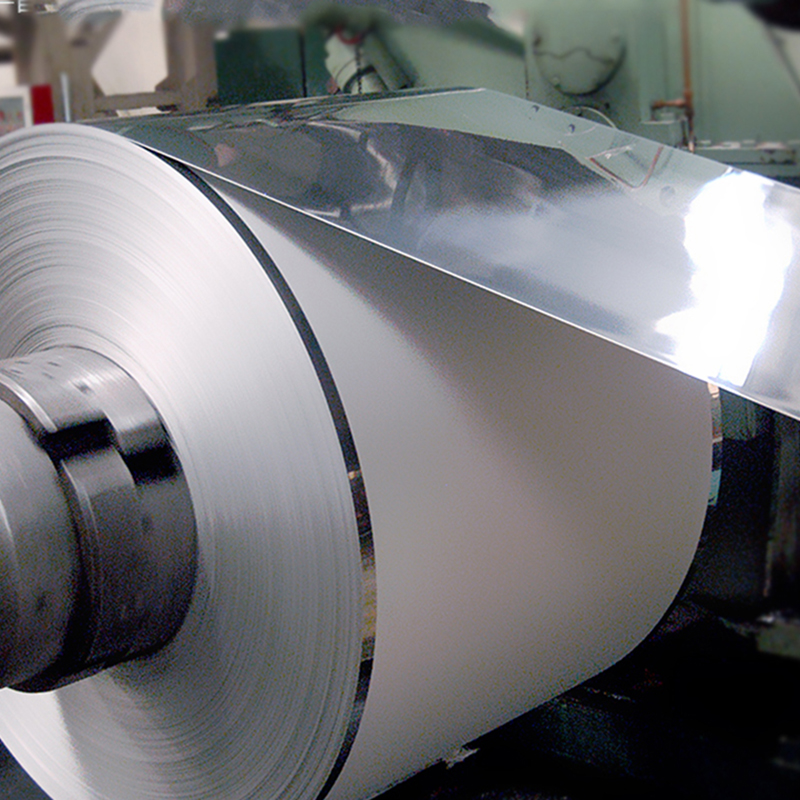
You must understand the distinct structural differences between the two primary material grades. Choosing incorrectly will destroy your equipment's efficiency.
Manufacturers process this alloy using highly specialized cold-rolling techniques. They carefully align the internal crystal structure of the iron. The crystalline grains follow the exact rolling direction of the sheet. This uniform alignment creates a phenomenon known as Goss texture.
The primary advantage is exceptional magnetic permeability. You achieve remarkably minimal core loss along one specific axis. It handles high-density flux better than any other metal. However, it carries distinct limitations. It proves completely ineffective in rotating machines. Flux travels in multiple directions inside a motor. The aligned grains block transverse magnetic fields. GOES also carries a significantly higher cost. It remains much more complex to source globally.
Steel mills anneal this grade specifically to ensure random crystal orientation. They want the internal structure pointing in every possible direction. This random distribution provides uniform magnetic properties across the entire sheet. It channels flux equally well sideways, backwards, and forwards.
This isotropic nature makes it the mandatory choice for electric motors. It serves as the foundational metal for generators. Fabricators also find it much easier to punch and stamp into complex geometries. The main limitation involves its higher baseline core loss. When you measure it strictly in a single direction, it underperforms compared to GOES.
Feature | GOES (Grain-Oriented) | NGOES (Non-Grain Oriented) |
|---|---|---|
Magnetic Properties | Unidirectional (highly efficient in one direction) | Omnidirectional (uniform in all directions) |
Primary Application | Power transformers, distribution transformers | Electric motors, generators, alternators |
Core Loss | Extremely low along the rolling direction | Higher baseline, but consistent at any angle |
Manufacturing Cost | High (complex metallurgical processing) | Moderate (standard cold rolling and annealing) |
Punchability | Poor (often sheared rather than punched) | Excellent (ideal for complex stator shapes) |
Specifying the right grade requires a deep understanding of manufacturing realities. You must balance theoretical physics against practical assembly floor capabilities.
Gauge selection represents a massive engineering balancing act. A thinner lamination yields noticeably lower eddy current losses. EV traction motors often push gauges down to 0.25mm. However, these thinner gauges drastically increase overall manufacturing costs. You need twice as many sheets to build the same core size.
Thinner laminations also reduce your internal stacking factor. Every piece of steel carries a microscopic layer of insulation. More sheets mean more insulation volume inside the core. This reduces the actual volume of active magnetic iron. It severely complicates the final assembly process. You must evaluate what specific efficiency target your project truly requires.
Bare metal laminations cannot touch each other. If they do, massive eddy currents flow through the entire stack. You must evaluate the necessary surface coating to prevent destructive short circuits.
C-3 Coating: An organic enamel coating. It improves punchability by acting as a dry lubricant. It cannot survive high-temperature stress-relief annealing.
C-4 Coating: A baked-on coating designed for moderately elevated operating temperatures.
C-5 Coating: An inorganic coating mixed with ceramic fillers. It easily handles intense stress-relief annealing temperatures. It provides excellent inter-laminar resistance.
C-6 Coating: An organic coating loaded with inorganic fillers. It offers a thick, highly durable barrier for massive generator cores.
You must match the coating to your exact operating temperature. Always consider your stress-relief annealing requirements. Evaluate your specific punchability needs before locking in a coating specification.
Adding silicon improves electrical performance. Unfortunately, high silicon content fundamentally makes the steel brittle. Specifying premium electrical steel requires a delicate compromise. You must balance maximum magnetic efficiency against structural integrity.
Brittle materials cause accelerated wear on expensive stamping dies. Carbide tooling chips easily when punching overly hard silicon alloys. High-volume manufacturing demands manageable tool wear to remain profitable. You cannot sacrifice your entire tooling budget just to shave a fraction of a watt off your core loss.
Procurement teams face intense challenges in today's material market. Navigating these risks requires strict oversight and proactive vendor management.
The rapid global push for electric vehicle adoption has strained supply lines. Mega-factories consume millions of tons of thin-gauge alloys annually. Smaller manufacturers often struggle to secure high-grade NGOES on time. Lead times frequently stretch into several months. You must implement robust risk mitigation strategies immediately. This requires validating multiple secondary suppliers early in your design phase. Never rely on a single mill for your critical components.
Poor thickness uniformity destroys core performance. We call this specific variation "crown" or edge drop. The center of the coil might measure perfectly. The edges might taper off thinner. Inconsistent gauges directly reduce your final stacking factor. They create microscopic air gaps between the assembled laminations.
Air acts as a massive magnetic resistor. These physical gaps degrade the ultimate efficiency of the motor or transformer. They also induce mechanical vibration and acoustic noise. You must demand strict dimensional tolerances from your rolling mill.
These specialized laminations remain highly susceptible to environmental damage. They also harbor sensitive internal magnetic properties. Mishandling them during transit easily destroys their engineered capabilities. You must enforce strict handling protocols across your entire supply chain.
Climate Control: Store coils in low-humidity environments. Rust immediately ruins the microscopic insulation coatings.
Avoid Dropping: Never drop or slam coils onto concrete floors. Mechanical shock introduces internal stresses that degrade magnetic permeability.
Gentle Uncoiling: Use proper tensioners when uncoiling the metal for stamping. Over-stretching the sheet stretches the crystalline grain structure.
Clean Environments: Keep stamping floors free of metallic dust. Conductive dust compromises the painted C-coatings and causes short circuits.

You must transition from theory to aggressive vendor qualification. Establish strict testing protocols before signing any long-term purchasing contracts.
Never assume grade parity between different mills. A grade designated as "50W470" from one supplier might behave differently from another. You must require independent lab verification for every single batch. Demand precise MTRs. Check the certified core loss (W/kg) at specific inductions and frequencies. Look closely at the Epstein frame test results. Validated MTRs form the absolute foundation of trustworthy sourcing.
Always evaluate new materials practically before committing to high-volume production. Run small supplier samples through your prototype stamping dies. Measure the resulting tool wear carefully. Check the final lamination flatness on a granite surface plate. Flat laminations guarantee a tightly packed, highly efficient core. Wavy laminations indicate severe internal stress from the rolling mill.
Shift your procurement focus away from the basic "price per ton." You must calculate the actual cost per watt of efficiency gained. Factor in your daily assembly rejection rates. Track the life expectancy of your stamping dies. Consider the long-term performance gains of the final product. Cheaper steel often creates incredibly expensive manufacturing headaches downstream. Paying a slight premium upfront usually secures reliable, repeatable manufacturing success.
Electrical steel remains a highly specialized and vital industrial asset. It directly dictates the functional viability of modern power transformers and dynamic electric motors. Choosing standard carbon alloys leads to immediate thermal failure. Specifying the correct silicon alloy ensures compliance with global energy mandates.
Choosing between GOES and NGOES requires careful analytical thought. Selecting the perfect insulation coating and gauge thickness demands deep engineering insight. You must align these precise technical specifications with your long-term commercial goals. Balancing core loss against tooling wear ensures profitable manufacturing runs.
Contact our dedicated material engineering team today. We will gladly review your specific application specifications. You can also request a detailed technical data sheet covering our available premium grades. We provide the expertise needed to optimize your next high-efficiency magnetic design.
A: Standard carbon steel lacks optimal magnetic properties. Manufacturers add silicon—typically up to 3.2%—to create a specialized alloy. This engineered chemistry dramatically increases electrical resistivity. The modified crystal structure allows the metal to channel magnetic flux efficiently. It prevents the core from retaining permanent magnetism after power shuts off.
A: Silicon fundamentally alters the iron matrix to solve specific energy-loss issues. It significantly increases the material's electrical resistivity. This higher resistance effectively chokes off localized eddy currents. Reducing these unintended circular currents directly lowers unwanted heat generation. This maximizes the overall electrical efficiency of the core.
A: Technically, you can assemble non-oriented grades into a transformer core. However, it remains highly inefficient. Transformers utilize a static, unidirectional magnetic field. Oriented steel (GOES) provides vastly superior performance in these single-direction applications. Engineers rarely recommend NGOES for continuous, large-scale grid infrastructure.
A: Gauges vary significantly based on operating frequencies. Standard industrial motors typically utilize laminations ranging from 0.35mm to 0.65mm. Conversely, high-frequency inverters and modern EV traction motors demand ultra-thin gauges. These highly specialized applications often drop down to 0.1mm to mitigate severe high-frequency eddy currents.


