
- All
- Product Name
- Product Keyword
- Product Model
- Product Summary
- Product Description
- Multi Field Search


Views: 0 Author: Site Editor Publish Time: 2026-02-17 Origin: Site


As global demand for high-efficiency electric vehicles continues to rise, Silicon Steel has become one of the most critical materials powering the next generation of EV motors and energy systems. For manufacturers pursuing greater torque density, higher efficiency, lower iron loss, and extended driving range, the role of Silicon Steel is now more essential than ever.
Today, leading suppliers such as JIACHEN POWER provide advanced Silicon Steel solutions for EV traction motors, hybrid systems, robotics, and high-voltage power equipment. With rapid breakthroughs in metallurgy, magnetic performance, and precision processing, Silicon Steel is reshaping the competitive landscape of the EV industry.
Below is an in-depth analysis of how Silicon Steel strengthens EV power systems, reduces energy loss, and contributes to improved driving performance — with data, product comparisons, and insights aligned with modern engineering trends.
Electric vehicle motors operate at high frequencies, high flux densities, and increased thermal loads. Under these demanding conditions, Silicon Steel provides three primary advantages:
Lower iron loss means motors waste less energy during magnetic reversal cycles. This translates directly into extended range and cooler operation.
High magnetic induction improves torque output and power density, enabling smaller motor size without compromising performance.
Modern EV motors operate at extremely high speeds (20,000 rpm or higher). Advanced Silicon Steel keeps rotor and stator laminations stable while limiting vibration and noise.
Such advantages explain why premium EV manufacturers prioritize the selection of high-quality Silicon Steel, especially cold-rolled electrical steel grades.
EV motors rely heavily on two major categories of electrical steel:
CRGO Electrical Steel — also known as Cold-rolled Grain-oriented (CRGO) — is optimized for directional magnetization. It is mainly used in high-efficiency transformers and high-voltage power systems inside EV charging infrastructures.
Cold-rolled Non-grain-oriented (CRNGO) is the primary material used in EV motors. It features:
Stable magnetic properties in all directions
Low iron loss
Excellent mechanical strength
EV traction motors, e-axles, and integrated drive systems overwhelmingly rely on CRNGO Electrical Steel.
To understand the differences clearly, see the comparison below.
| Feature / Property | CRGO Electrical Steel | CRNGO Electrical Steel |
|---|---|---|
| Magnetization Direction | Single-direction | Multi-direction |
| Main Use Case | Transformers, charging systems | EV motors, generators |
| Iron Loss | Very low | Low |
| Mechanical Strength | Moderate | High |
| Suitability for High RPM Motors | Low | Very High |
| Cost | Higher | Moderate |
Both materials play important roles, but CRNGO dominates EV motor manufacturing due to its multi-directional magnetic performance.
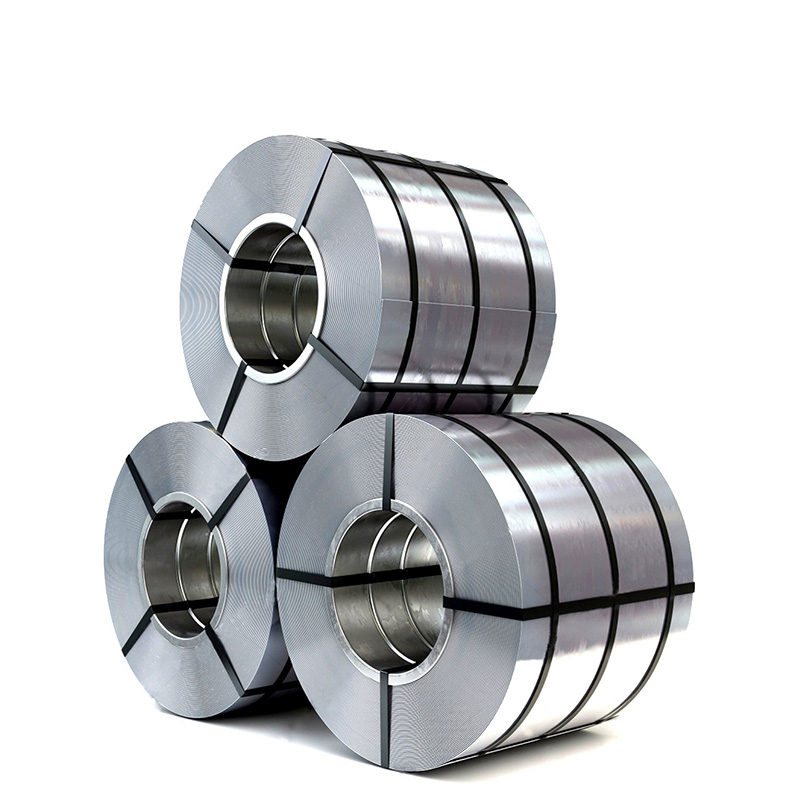
Recent industry data shows dramatic improvements in Silicon Steel performance. Innovations from industry leaders have pushed the limits of magnetic efficiency:
Ultra-low iron loss: Advanced electrical steel such as ESW8517 achieves 7.9 W/kg at 400 Hz, setting a new global benchmark.
High magnetic induction: Materials such as 20RSW175 reach 1.75 T, significantly increasing motor torque density.
Superior mechanical strength: Next-generation grades achieve 490 MPa yield strength, balancing structural stability and magnetic performance.
These innovations align perfectly with the demands of modern EV motors, where every watt of loss reduction directly increases vehicle range.
Driving range is influenced by:
Motor efficiency
Battery consumption
Heat management
Rotational losses
Because the motor is one of the highest power-consuming components in an EV, the magnetic core material becomes a major factor in determining energy efficiency.
Lower core losses → less wasted battery power
Higher torque density → shorter acceleration times
Better thermal stability → reduced cooling load
Higher strength → supports ultra-high-speed motors (20,000–25,000 rpm)
The result is 5–10% extended driving range simply through improved motor core material selection.
Fast-evolving EV technologies require precision-engineered magnetic materials. The following trends are shaping EV motor design:
High-speed motors demand low iron loss Silicon Steel to prevent overheating at extreme rpm.
Compact design requires:
Thin laminations
High magnetic induction
Excellent mechanical durability
Oil-cooling places additional corrosion and temperature requirements on motor cores, which modern Silicon Steel meets through advanced coating technologies.
| Material Type | Iron Loss at 400 Hz | Magnetic Induction | Mechanical Strength | EV Suitability |
|---|---|---|---|---|
| Standard Steel | Very High | Low | Moderate | Poor |
| Low-grade Silicon Steel | High | Medium | High | Moderate |
| High-grade Silicon Steel (CRNGO) | Low | High | Very High | Excellent |
This comparison shows why automakers and Tier-1 suppliers overwhelmingly choose Silicon Steel for premium EV lines.
Because EV ecosystems include more than just motors, Electrical Steel materials such as CRGO are essential in:
DC-DC converters
High-frequency transformers
On-board chargers (OBC)
Fast-charging stations
High-voltage components rely on the directional magnetic performance of CRGO to minimize energy loss under continuous load.
To explore more materials, you can visit the supplier page of JIACHEN POWER here:
Silicon Steel Electrical Steel Materials
Manufacturers like JIACHEN POWER accelerate EV development using:
Improved lamination bonding reduces vibration and noise.
A breakthrough method that prevents iron loss deterioration during motor housing insertion.
Ensures stable lamination stacks at high rotational speeds.
Thinner layers reduce eddy current loss, critical for high-speed EV motors.
JIACHEN POWER provides high-precision Silicon Steel with:
Tight thickness tolerance
Ultra-low iron loss
High mechanical strength
Reliable insulation coatings
Custom cutting and core assembly
Industry-leading transformer and motor core solutions
Their material solutions meet the needs of:
EV traction motors
Hybrid systems
OBC & high-voltage components
Robotics
Energy storage systems
High-frequency power electronics
To explore electrical steel products suitable for EV systems:
Visit JIACHEN POWER Electrical Steel
Silicon Steel is a magnetic alloy with high electrical resistance and low iron loss, making it ideal for EV motors and transformers where efficiency is critical.
CRGO has grain-oriented magnetic direction, ideal for transformers.
CRNGO has multi-directional properties, making it suitable for EV motors.
By reducing motor iron loss, Silicon Steel directly improves efficiency, extending range by 5–10% depending on driving conditions.
Absolutely — high-speed motors generate significant iron loss; only premium CRNGO materials can handle such conditions without overheating.
Yes, JIACHEN POWER offers custom designs for EV motors, transformers, power electronics, and more.
Silicon Steel has become a defining material in the evolution of electric mobility. From ultra-efficient traction motors to high-voltage charging systems, it significantly enhances EV performance, extending driving range, reducing energy loss, and boosting power density.
As EV technologies evolve, the demand for premium Electrical Steel, including Cold-rolled Grain-oriented (CRGO) and Cold-rolled Non-grain-oriented (CRNGO), will continue to surge globally. Companies like JIACHEN POWER are at the forefront of delivering advanced magnetic materials that power the future of clean transportation.
If you need custom Silicon Steel solutions or EV-grade electrical steel products, explore more here:
High-performance Electrical Steel from JIACHEN POWER


